


Clickfixing is rapidly becoming one of the most concerning social engineering techniques observed by our analysts at the Stripe OLT SOC. Rather than exploiting technical problems, Clickfixing targets user trust and familiarity with simple verification prompts, tricking victims into executing malicious scripts under the guise of routine human verification tasks.
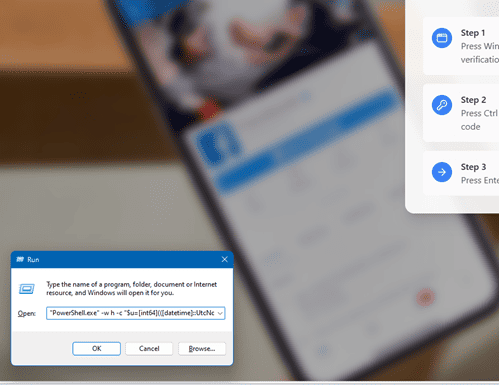
Clickfixing is a social engineering tactic where attackers use fake dialogue boxes designed to mimic legitimate verification prompts rather than technical errors. Victims, believing they’re simply verifying their identity or proving they’re human, follow provided instructions and unknowingly execute malicious scripts.
Typically, these prompts resemble verification requests such as “Follow these steps to prove you’re human” rather than error messages. Victims encounter instructions that involve copying and pasting commands into PowerShell or the Windows Run dialogue (WinKey+R). Our analysts have also observed attackers silently copying malicious scripts into the victim’s clipboard automatically, further simplifying execution.
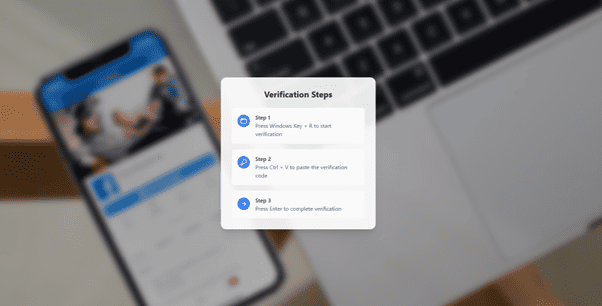
Clickfixing exploits trust and habitual responses:
Our analysts have noted several specific methods:
The Stripe OLT SOC has observed multiple distribution methods:
Clickfix campaigns can lead to command execution, data exfiltration, or deliver second-stage payloads such as:
Organisations impacted by Clickfix attacks risk significant consequences, including data breaches, operational disruptions and financial losses.
Organisations should proactively adopt measures to combat Clickfixing:
Understanding Clickfixing and proactively addressing this threat through vigilant awareness and technical safeguards is essential. Organisations equipped with these defences will significantly mitigate the impact of this rising social engineering tactic. As social engineering continues to evolve, it’s essential for organisations to stay informed about emerging threats like Clickfixing. By fostering a security-conscious culture, continuously updating defensive strategies, and maintaining robust technological controls, organisations can significantly reduce their vulnerability to these sophisticated attacks and better protect their critical assets.
If you’re concerned about emerging threats like Clickfixing and want to stay one step ahead of social engineering attacks, our security experts at Stripe OLT are here to help.
Book a free discovery session with us — we’re here to asses your current security posture and recommend tailored strategies to protect your organisation from evolving threats.