"Moving to E5 has been really good from a security point of view... Now we can get a holistic view of what’s going on, which helps us to make changes and recommendations for future plans."
IT Service Manager
Ian Harkess
Trusted by industry leaders
Kickstart Your FastTrack Journey
Fill out the short form below to express your interest in our FastTrack programme, and we’ll be in touch soon.
Please note: A minimum of 150 enterprise licenses is required for FastTrack eligibility.
“We needed to find solutions to a variety of issues whilst being a complex business, operating in a 24/7 environment. Stripe OLT listened and understood immediately the challenges we faced.”
IT Operations Manager
Simon Darley
Trusted by industry leaders
Let's Talk
Call us on one of the numbers below, we cover the whole of the UK, so call the nearest office.
“We needed to find solutions to a variety of issues whilst being a complex business, operating in a 24/7 environment. Stripe OLT listened and understood immediately the challenges we faced.”
Modern Business Email Compromise (BEC) attacks often rely on compromised mailboxes rather than obvious account takeovers. In this article, we'll explore the tactics observed in recent investigations, the signs defenders should look for and practical steps organisations can take to reduce risk.
“In many cases, the strongest indicator of BEC isn't a single alert, but a series of subtle signals that only become meaningful when viewed together.”
Business Email Compromise: A Quick Refresher
Business Email Compromise has become a commonplace tactic for threat actors, first formalised in 2013 when the FBI formally began tracking BEC as an emerging financial cyber threat.
Since then, the practice has only grown in popularity and sophistication, moving from the CEO impersonation commonly associated with early BEC campaigns towards compromising genuine business mailboxes. This access allows threat actors to monitor conversations, manipulate legitimate payment processes and target additional victims while appearing to be a trusted sender.
BEC looks like mail from a sender you have a history with, a third party you rely on, or a client you’ve worked with before. The catch is that the person behind the email isn’t really them. Yes, it came from their usual email address. Yes, it wasn’t blocked at the door by your usual phishing or spam policies. And yes, the signature you see seems familiar.
This email may not seem so conspicuous as you quickly work through your inbox without giving it a second thought, but within it there is a lure designed to compromise your mailbox and use that access against you, your company, and your contacts.
This lure might look like a shared document or an invoice. It might be hidden within an attached PDF or behind a QR code waiting to be scanned. What these lures have in common, and what makes them effective, is familiarity and routine. They are built to fit into the usual flow of your inbox and fool you just long enough to secure that click.
Behind the lure is an attacker-controlled sign-in flow, acting as a middleman between the victim and the legitimate service. The victim signs in and completes MFA as normal, but the authenticated session returned by the service can be captured by the threat actor and reused to gain access to the account.
Caption: A simplified example of a modern Business Email Compromise (BEC) attack chain, showing how attackers move from an initial phishing lure to mailbox access, victim concealment and further fraud or compromise.
What We’re Seeing in Recent BEC Investigations
The phishing remains familiar, but the lures continue to improve. Ultimately, they all aim to achieve the same thing: convincing a victim to hand over access to their mailbox. The vector might change too; it might be a Teams call from someone with support in their display name asking you to log into a malicious portal.
What’s evolving is the post-compromise playbook – a common thread in recent incidents is the use of mailbox rules to keep the victim in the dark.
These rules often center around hiding incoming mail to keep the victim unaware of the breach. These rules look to:
Mark incoming messages as read
Move messages into Archive or another folder
Delete specific messages
Hide replies relating to phishing emails the attacker has sent
This covert approach is an effort to continue the chain of mailbox breaches, ultimately leading to financial gain for the threat actor. Microsoft discusses how AiTM phishing and mailbox abuse combine to support modern BEC campaigns in their recent article on the resurgence of BEC.
Perhaps equally notable is what we don’t see. Across the incidents reviewed for this article, overt changes to compromised accounts, such as password resets or the registration of additional MFA methods, were uncommon. Instead, attackers focused on the mailbox itself, avoiding unnecessary changes that might draw attention to the compromise.
This reflects a broader trend in modern BEC: attackers prioritise stealth over disruption. A small number of carefully chosen actions can conceal their activity, exploit existing business relationships and turn one trusted identity into a route to the next victim.
Who Is Being Targeted?
BEC is not reserved for large enterprises or multinational organisations. In line with the inconspicuous approach outlined above, even small organisations can be the victim of BEC.
The hook for threat actors is the relationships and processes sat behind the victim’s mailbox. An account that regularly communicates with suppliers, customers or partner organisations provides a threat actor with an established network of trust to exploit.
Finance teams and senior executives may represent obvious targets, but any mailbox with access to valuable information or trusted external relationships can provide an attacker with an opportunity. Once compromised, that trust can be exploited for payment fraud or used to place the next lure in someone’s inbox.
What Should Defenders Look For?
Signs of Suspicious Authentication
Identity telemetry often gives the first indication that something isn’t right, however as we’ve already noted defenders shouldn’t expect every compromise to result in obvious changes to the account. MFA additions or password modifications are not always present.
Keep an eye out for:
Risky user or risky sign-in detections
Authentication from previously unseen infrastructure or locations, VPNs or Proxies
Unusual session behaviour
Authentication occurring outside of the user’s normal pattern
Suspicious MFA/authentication-method changes
Mailbox Changes
Once an identity is suspected of compromise, turning to the mailbox is the smart next step. The creation or modification of inbox rules, particularly those configured to delete messages, mark them as read, move them into less-visible folders or forward them externally should warrant investigation.
Changes in Email Behaviour
The final piece is what the mailbox starts doing.
Look for:
Sudden increases in outbound emails
Large numbers of external recipients
Recipients the user doesn’t normally communicate with
Similar messages being sent to many contacts
Phishing URLs or attachments being distributed from the mailbox
Unusual replies/deletions around those messages
The primary detection opportunity comes from joining these signals together. A mailbox rule on its own may be completely legitimate, as might an unusual sign-in. Linking a risky login to a new inbox rule and abnormal outbound email activity paints a much clearer picture of a BEC compromise.
Reducing the Risk of BEC
Strengthen Identity and Access Controls
Organisations should move towards phishing-resistant authentication and consider Conditional Access controls so that access is only granted to trusted, compliant devices. Together, these controls significantly raise the barrier for threat actors attempting to turn stolen credentials or sessions into abusable access.
Limit and Monitor Mailbox Abuse
Mailbox functionality available to legitimate users can also provide useful tools to an attacker. Automatic external forwarding should be restricted where it is not operationally required, while the creation or modification of mailbox rules should be closely monitored.
Rules that delete emails, mark them as read, move them to less visible folders or forward them externally are particularly important when observed alongside other indicators of compromise.
Detect the Compromise that Gets Through
No preventative control is infallible, so organisations must also be prepared to detect the compromise that gets through. Monitoring identity, mailbox and outbound email activity together can expose the sequence of behaviours that follows successful account compromise, even where no single event provides definitive evidence on its own. In many cases, it is the combination of these subtle indicators, rather than any single alert, that reveals a BEC compromise.
Final Thoughts
Modern BEC attacks don’t always leave obvious signs behind. Instead, they often rely on subtle mailbox activity, trusted relationships and small changes that can be easy to miss when viewed in isolation.
Modern Business Email Compromise (BEC) attacks often rely on compromised mailboxes rather than obvious account takeovers. In this article, we'll explore the tactics observed in recent investigations, the signs defenders should look for and practical steps organisations can take to reduce risk.
Remote access technologies have become a staple of modern business operations, enabling secure connectivity for distributed workforces and third-party suppliers. But as cyber defenders have learnt time and time again, threat actors are often quick to adopt the same legitimate tools organisations rely on every day.
Mesh VPN platforms such as Tailscale, Headscale, ZeroTier, Nebula and Netmaker provide secure, encrypted connectivity between devices. While valuable for legitimate remote access, those same capabilities can also be abused by attackers seeking persistent access to compromised systems.
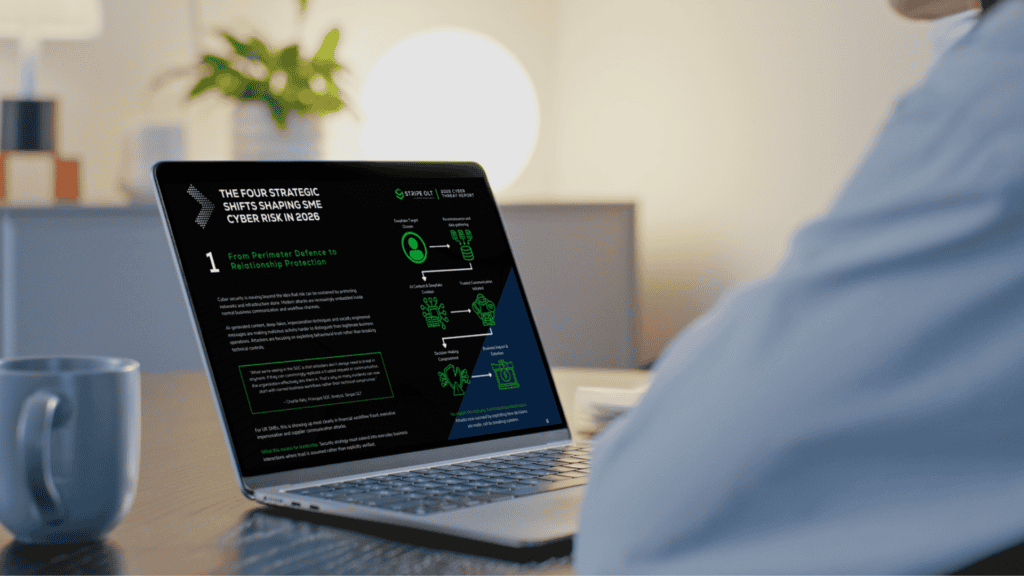
The 2026 Cyber Threat Report explores how attackers are exploiting people, identities and trust to bypass traditional defences, helping UK SME leaders understand the risks they need to prioritise in 2026.
Canary Tokens offer a practical way to strengthen detection and visibility. In this article, we'll explore how they work, where they add value, and how organisations can use them as part of a wider security strategy.
Our SOC team recently uncovered hidden surveillance functionality within a trusted browser extension, including capabilities designed to collect browsing activity, generate unique identifiers and communicate with external infrastructure.
This article breaks down CVE-2026-32201, a zero-day spoofing vulnerability in Microsoft SharePoint Server. You’ll learn how the flaw works, why “spoofing” is more dangerous than it sounds, and what your team needs to do right now if on-premises SharePoint is part of your environment.
This report provides a detailed analysis of OAuth token abuse, focusing on how threat actors bypass defensive security measures to gain unauthorised access.
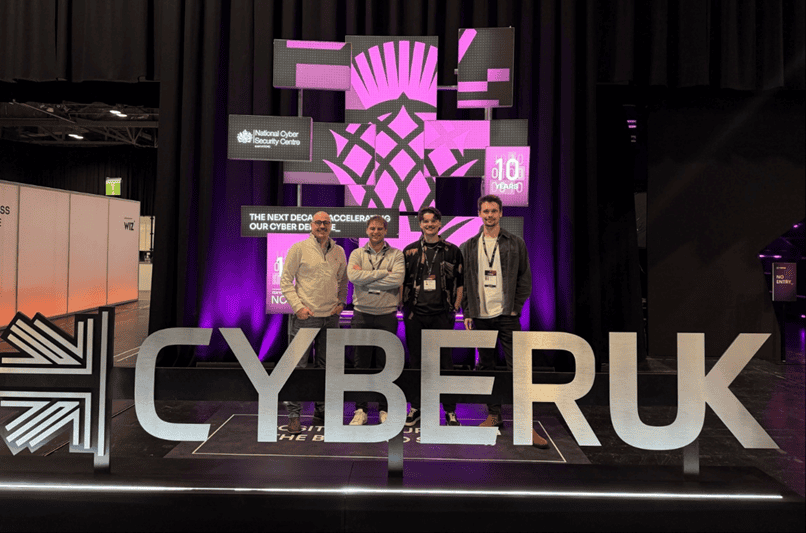
This Expert Intel summarises the key cyber security themes from CYBERUK 2026, exploring how AI is accelerating attacker capability, why identity remains the primary control gap, and what UK based organisations should prioritise to strengthen detection, response, and supply chain resilience.
Microsoft is reshaping its licensing strategy with the introduction of Microsoft 365 E7, new pricing changes, continued Teams separation, and additional security and AI functionality being bundled into existing licences. For organisations investing in AI, automation, security, and compliance, these changes could significantly affect licensing costs, procurement decisions, and long-term Microsoft 365 strategy.
This report provides an in‑depth analysis of the Tycoon2FA phishing‑as‑a‑service platform, including how it bypasses MFA and harvests credentials through session authentication cookies. In addition, the report outlines recommended mitigation strategies to help prevent and detect this phishing technique.
In this intel we set out to understand the changing landscape of trust, in a digital world where AI-generated code is permeating the software supply chain at scale and AI-enabled phishing is making adversarial infrastructure harder than ever to distinguish from the real thing.
This website uses cookies. By using this site you agree to our use of cookies. We use cookies to enhance your experience. To understand the specific cookies we use and how we handle your data, see our Cookie Policy, Privacy Policy and Terms & Conditions. Manage your preferences at any time by clicking the 'View Preferences' button.
Functional
Always active
The technical storage or access is strictly necessary for the legitimate purpose of enabling the use of a specific service explicitly requested by the subscriber or user, or for the sole purpose of carrying out the transmission of a communication over an electronic communications network.
Preferences
The technical storage or access is necessary for the legitimate purpose of storing preferences that are not requested by the subscriber or user.
Statistics
The technical storage or access that is used exclusively for statistical purposes.The technical storage or access that is used exclusively for anonymous statistical purposes. Without a subpoena, voluntary compliance on the part of your Internet Service Provider, or additional records from a third party, information stored or retrieved for this purpose alone cannot usually be used to identify you.
Marketing
The technical storage or access is required to create user profiles to send advertising, or to track the user on a website or across several websites for similar marketing purposes.