"Moving to E5 has been really good from a security point of view... Now we can get a holistic view of what’s going on, which helps us to make changes and recommendations for future plans."
IT Service Manager
Ian Harkess
Trusted by industry leaders
Kickstart Your FastTrack Journey
Fill out the short form below to express your interest in our FastTrack programme, and we’ll be in touch soon.
Please note: A minimum of 150 enterprise licenses is required for FastTrack eligibility.
“We needed to find solutions to a variety of issues whilst being a complex business, operating in a 24/7 environment. Stripe OLT listened and understood immediately the challenges we faced.”
IT Operations Manager
Simon Darley
Trusted by industry leaders
Let's Talk
Call us on one of the numbers below, we cover the whole of the UK, so call the nearest office.
“We needed to find solutions to a variety of issues whilst being a complex business, operating in a 24/7 environment. Stripe OLT listened and understood immediately the challenges we faced.”
In this Expert Intel, our Principal Security Analyst, breaks down how a new spearphishing campaign operates - and the practical steps organisations must take to recognise, resist, and respond to these types of attack.
Emails observed feature anti-detection techniques such as hidden characters and high-reputation external links, as well as single use phishing URLs that self-destruct once accessed.
The Stripe OLT SOC has identified a sophisticated Spearphishing campaign targeting senior employees, particularly those in C-Suite and leadership positions.
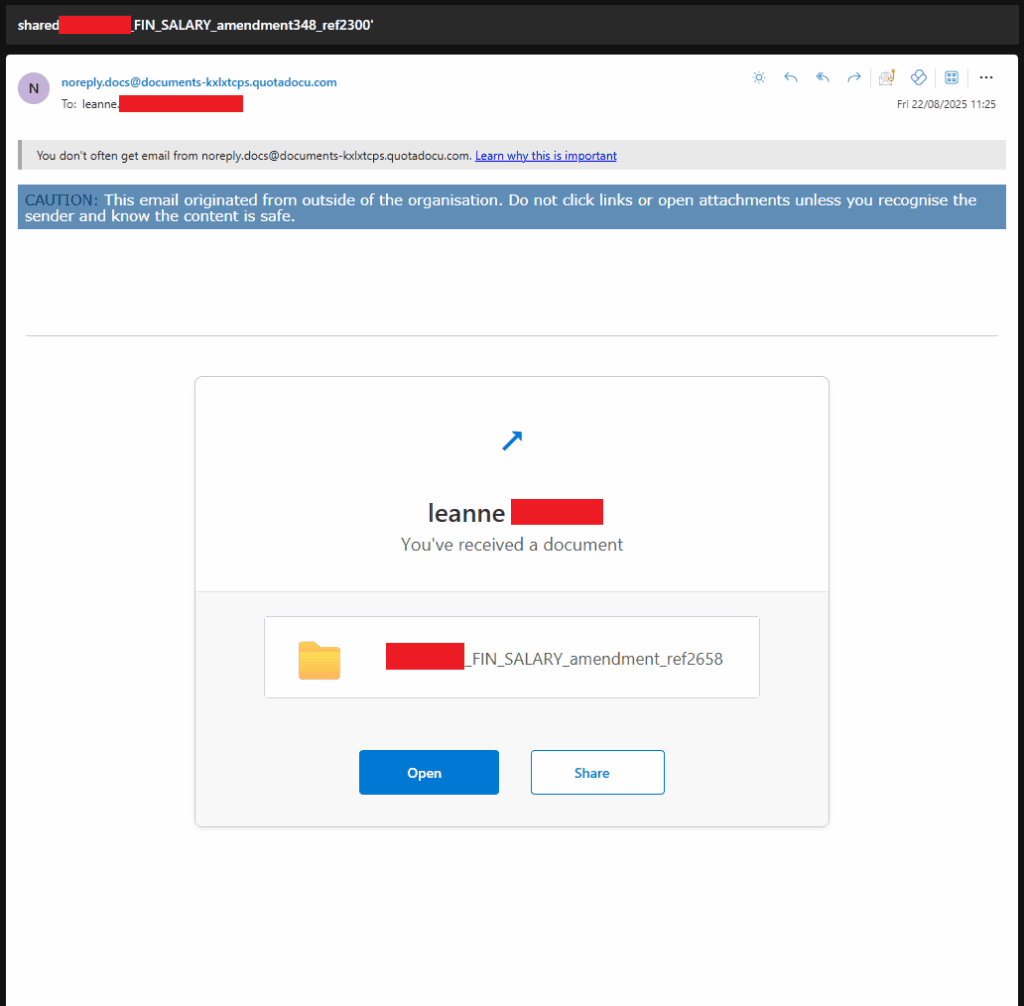
Actors behind this campaign are leveraging tailored emails that impersonate internal HR communications, via a shared document in OneDrive, to trick recipients into entering corporate credentials.
Key Details
Targets: Executives and senior leadership across multiple industries
Email Content: Subject lines reference “Salary amendment” or “FIN_SALARY” and pose as OneDrive document-sharing notifications.
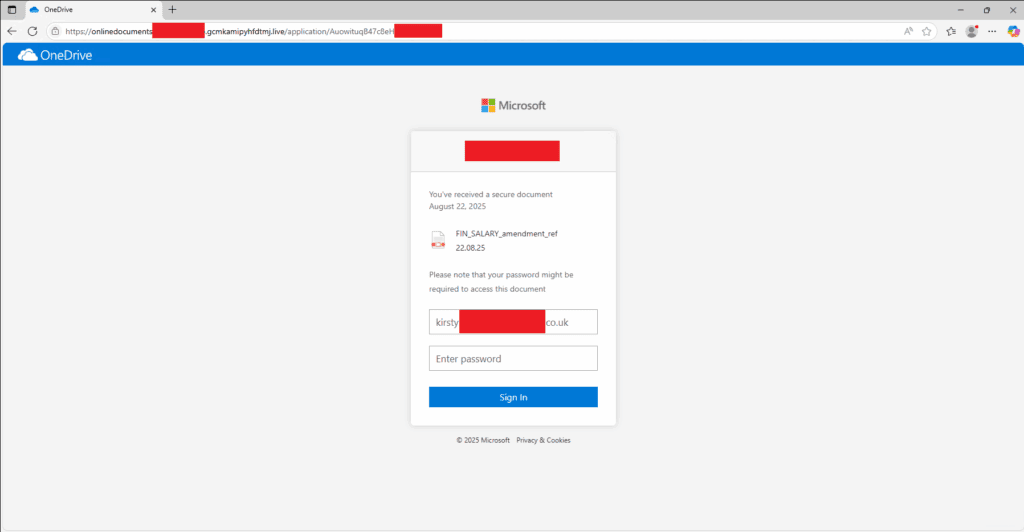
Credential Theft Page: The link leads to a convincing Microsoft Office/OneDrive login page, which harvests credentials. Both the email body and phishing page are customised with the recipient’s name and company details to enhance credibility.
Delivery Method: Emails are sent via Amazon Simple Email Service (SES) infrastructure. The actor is rotating between many sending domains and subdomains to evade detection. To date, approximately 80 domains have been identified as part of this campaign.
Campaign Tactics: We have observed the actor “warming up” inboxes by sending an initial benign email days before the phishing attempt. Emails observed feature anti-detection techniques such as hidden characters and high-reputation external links, as well as single use phishing URLs that self-destruct once accessed.
Figure 1: Example Email Body Content
Figure 2: Example Credential Phishing Page
Technical Details
Our analysis of campaign infrastructure shows that the actor is leveraging multiple providers across delivery, registration, DNS, and hosting. Specifically:
Amazon SES – used for email delivery.
Cloudflare – observed as a frequent DNS/nameserver provider for related domains.
Akamai Cloud (formerly Linode) – identified as a hosting provider for phishing infrastructure.
Mat Bao Corporation – the most common registrar, with the majority of domains registered here.
Web Commerce Communications Limited (WebNic.cc) – additional registrar observed.
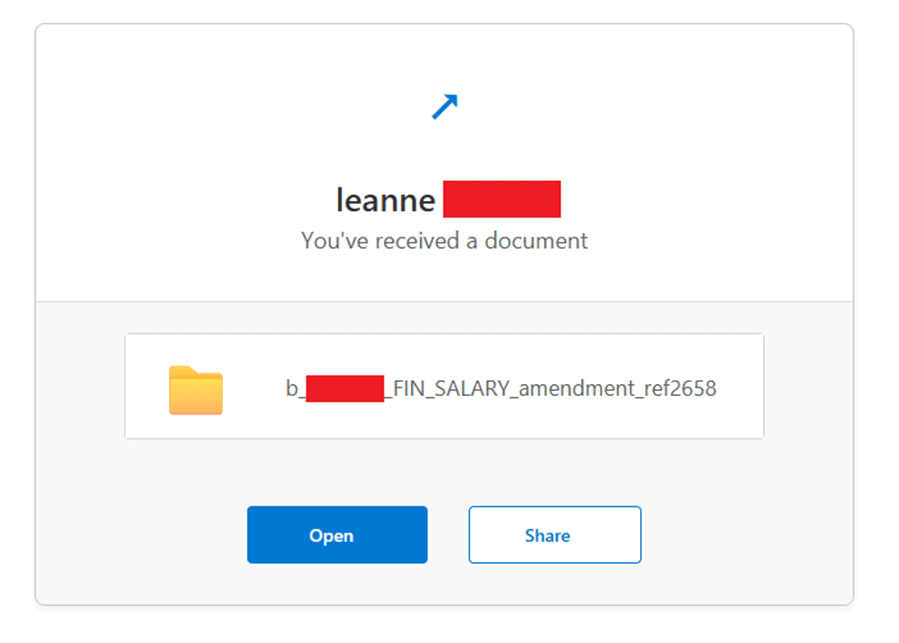
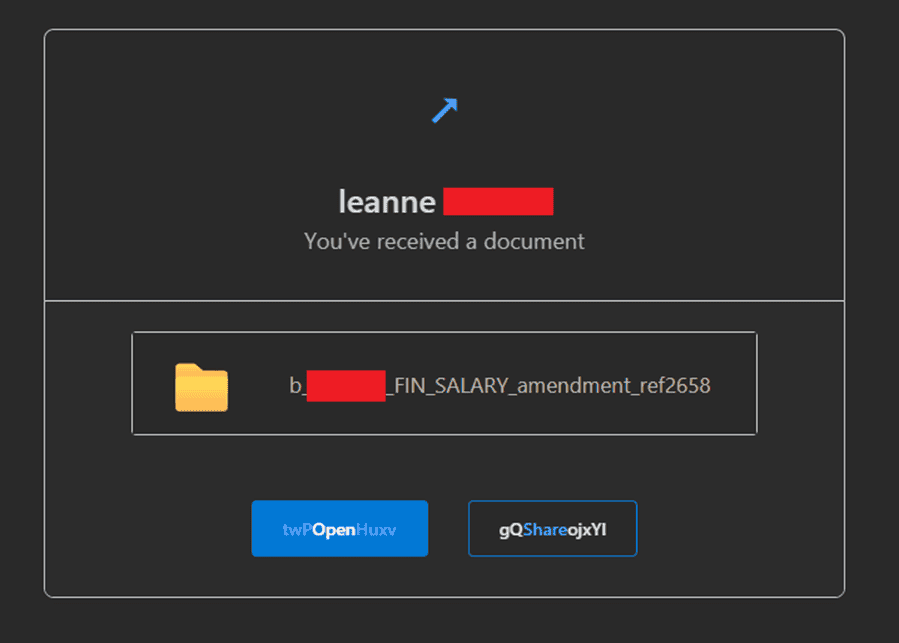
We have also observed the actor behind this campaign using obfuscated button text to bypass detection methods. When the initial email is viewed in Light Mode, the buttons appear as “Open” and “Share”.
In Dark Mode, concealed padding becomes visible, exposing randomised alphanumeric strings such as twPOpenHuxv and gQShareojxYI. This breaks up high value trigger words like “Open” and “Share,” reducing the likelihood of detection by secure email gateways that apply string or regex based rules.
Figure 3: Example Email Body Content, Light Mode
Figure 4: Example Email Body Content, Dark Mode
Recommended Actions
To reduce exposure and strengthen resilience internally to threats like this, organisations should take the following steps – these aren’t optional safeguards, they’re the essentials:
Awareness for executives and assistants – Ensure that those most likely to be targeted understand this campaign. The actor is using realistic “salary amendment” subject lines and personalised company details to increase credibility.
Scepticism around unexpected documents – Remind staff to be cautious when receiving links or documents relating to HR, payroll, or salary matters, particularly when sent externally.
Reporting suspicious emails – Make it clear how to escalate suspicious messages quickly within your business. The faster these are reported to your security resource, the quicker they can take action to protect others.
Support staff training – Executive assistants and close colleagues are also high-value targets. Ensure they receive the same level of awareness training and support as C-suite members.
For Security & IT TeaMs
While awareness is the first line of defence, this campaign is sophisticated enough that relying solely on end-user caution is not enough. Security and IT teams should proactively hunt for IOCs and check whether their organisation has already been targeted.
Our SOC analysts recommend starting with targeted hunting queries and blocking domains linked to this campaign.
Sentinel Hunting Query
Run the following KQL query in Sentinel to detect emails that match the observed subject lines:
EmailEvents
     | where Subject contains "FIN_SALARY"
     | where EmailDirection == "Inbound"
     | project Timestamp, RecipientEmailAddress, SenderMailFromDomain, Subject, ConfidenceLevel, NetworkMessageId, EmailAction
Indicators of Compromise (IOCs)
The following is a list of domains have been used for email sending:
Spearphishing is evolving, and adversaries are investing in more targeted, evasive tactics.
If you’d like support in strengthening your detection and response capabilities, book a free discovery session with our team. We’ll help you assess where you stand, and help you understand how to get ahead.
Modern Business Email Compromise (BEC) attacks often rely on compromised mailboxes rather than obvious account takeovers. In this article, we'll explore the tactics observed in recent investigations, the signs defenders should look for and practical steps organisations can take to reduce risk.
Remote access technologies have become a staple of modern business operations, enabling secure connectivity for distributed workforces and third-party suppliers. But as cyber defenders have learnt time and time again, threat actors are often quick to adopt the same legitimate tools organisations rely on every day.
Mesh VPN platforms such as Tailscale, Headscale, ZeroTier, Nebula and Netmaker provide secure, encrypted connectivity between devices. While valuable for legitimate remote access, those same capabilities can also be abused by attackers seeking persistent access to compromised systems.
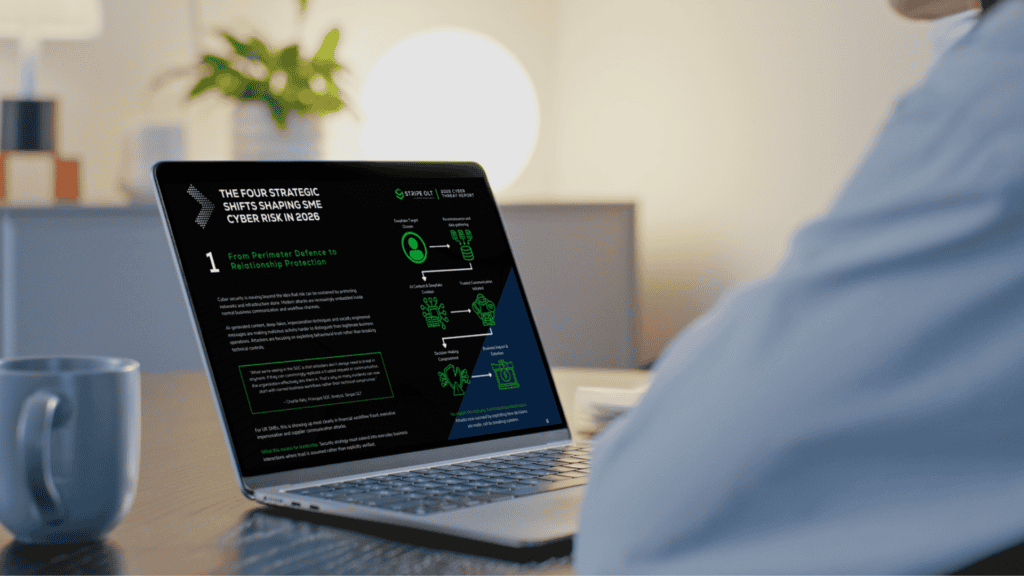
The 2026 Cyber Threat Report explores how attackers are exploiting people, identities and trust to bypass traditional defences, helping UK SME leaders understand the risks they need to prioritise in 2026.
Canary Tokens offer a practical way to strengthen detection and visibility. In this article, we'll explore how they work, where they add value, and how organisations can use them as part of a wider security strategy.
Our SOC team recently uncovered hidden surveillance functionality within a trusted browser extension, including capabilities designed to collect browsing activity, generate unique identifiers and communicate with external infrastructure.
This article breaks down CVE-2026-32201, a zero-day spoofing vulnerability in Microsoft SharePoint Server. You’ll learn how the flaw works, why “spoofing” is more dangerous than it sounds, and what your team needs to do right now if on-premises SharePoint is part of your environment.
This report provides a detailed analysis of OAuth token abuse, focusing on how threat actors bypass defensive security measures to gain unauthorised access.
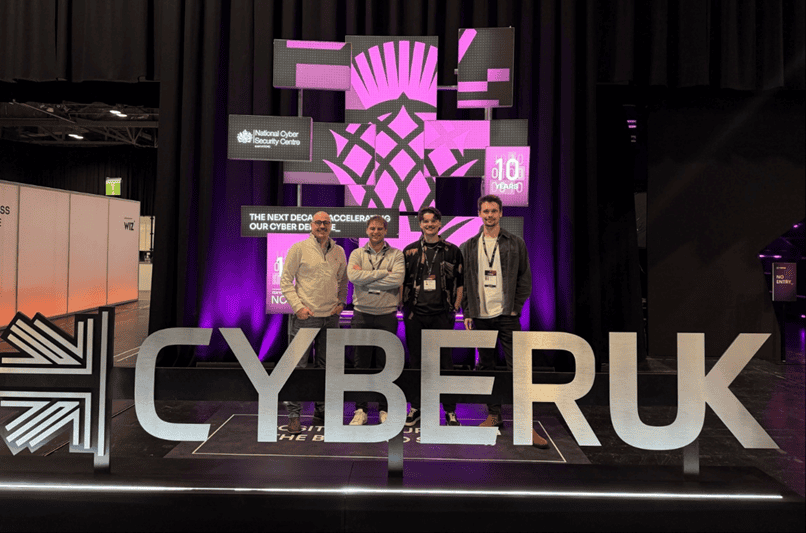
This Expert Intel summarises the key cyber security themes from CYBERUK 2026, exploring how AI is accelerating attacker capability, why identity remains the primary control gap, and what UK based organisations should prioritise to strengthen detection, response, and supply chain resilience.
Microsoft is reshaping its licensing strategy with the introduction of Microsoft 365 E7, new pricing changes, continued Teams separation, and additional security and AI functionality being bundled into existing licences. For organisations investing in AI, automation, security, and compliance, these changes could significantly affect licensing costs, procurement decisions, and long-term Microsoft 365 strategy.
This report provides an in‑depth analysis of the Tycoon2FA phishing‑as‑a‑service platform, including how it bypasses MFA and harvests credentials through session authentication cookies. In addition, the report outlines recommended mitigation strategies to help prevent and detect this phishing technique.
In this intel we set out to understand the changing landscape of trust, in a digital world where AI-generated code is permeating the software supply chain at scale and AI-enabled phishing is making adversarial infrastructure harder than ever to distinguish from the real thing.
This website uses cookies. By using this site you agree to our use of cookies. We use cookies to enhance your experience. To understand the specific cookies we use and how we handle your data, see our Cookie Policy, Privacy Policy and Terms & Conditions. Manage your preferences at any time by clicking the 'View Preferences' button.
Functional
Always active
The technical storage or access is strictly necessary for the legitimate purpose of enabling the use of a specific service explicitly requested by the subscriber or user, or for the sole purpose of carrying out the transmission of a communication over an electronic communications network.
Preferences
The technical storage or access is necessary for the legitimate purpose of storing preferences that are not requested by the subscriber or user.
Statistics
The technical storage or access that is used exclusively for statistical purposes.The technical storage or access that is used exclusively for anonymous statistical purposes. Without a subpoena, voluntary compliance on the part of your Internet Service Provider, or additional records from a third party, information stored or retrieved for this purpose alone cannot usually be used to identify you.
Marketing
The technical storage or access is required to create user profiles to send advertising, or to track the user on a website or across several websites for similar marketing purposes.