"Moving to E5 has been really good from a security point of view... Now we can get a holistic view of what’s going on, which helps us to make changes and recommendations for future plans."
IT Service Manager
Ian Harkess
Trusted by industry leaders
Kickstart Your FastTrack Journey
Fill out the short form below to express your interest in our FastTrack programme, and we’ll be in touch soon.
Please note: A minimum of 150 enterprise licenses is required for FastTrack eligibility.
“We needed to find solutions to a variety of issues whilst being a complex business, operating in a 24/7 environment. Stripe OLT listened and understood immediately the challenges we faced.”
IT Operations Manager
Simon Darley
Trusted by industry leaders
Let's Talk
Call us on one of the numbers below, we cover the whole of the UK, so call the nearest office.
“We needed to find solutions to a variety of issues whilst being a complex business, operating in a 24/7 environment. Stripe OLT listened and understood immediately the challenges we faced.”
Microsoft Ignite 2026 provided insight into how organisations are approaching AI, with greater focus on agents, governance and operational readiness. In this article, Alex Eley shares his key takeaways from the event and what technology leaders should be considering as AI becomes embedded in day-to-day business operations.
"The AI conversation is moving from experimentation to operational discipline."
Microsoft Ignite has once again delivered a huge number of announcements across AI, security, cloud and the modern workplace.
But perhaps the most important message from this year’s event isn’t any single new product. It is how AI is moving from something organisations experiment with to something that increasingly sits inside day-to-day business operations.
That shift has practical implications for organisations. Attention is increasingly turning towards how AI can be deployed safely, governed effectively and integrated into day-to-day operations at scale.
Microsoft’s announcements at Ignite give us a much clearer picture of what the future could look like.
Copilot is moving from answering questions to doing work
For the past few years, generative AI has largely been defined by chat: ask a question, receive an answer. The latest Copilot developments move considerably beyond this model.
Copilot Cowork is designed to let employees delegate multi-step pieces of work to Copilot rather than prompting it through every individual stage. Microsoft is extending this model with projects, plugins, Planner and OneNote integration and event-driven triggers.
Copilot Today moves in a more proactive direction, helping surface the information and work requiring a user’s attention. Meanwhile, Copilot Autopilot introduces the concept of a persistent agent which can continue working even when its user is not present.
This direction is important for businesses, with AI evolving from an assistant you speak to into a digital capability that can be delegated work, respond to events and increasingly operate alongside employees.
Microsoft IQ: giving AI the context of your business
One of the challenges with enterprise AI has always been context. Even highly capable AI models need access to organisational context to deliver meaningful business value.
Microsoft IQ is Microsoft’s answer to this problem: an enterprise intelligence and context layer designed to give Copilot and agents a better understanding of the organisation they are working within.
Caption: Satya Nadella introduces Microsoft IQ at Ignite.
Microsoft divides this across several complementary capabilities:
Work IQ provides context about people, relationships and work across Microsoft 365.
Fabric IQ provides understanding of structured business data, including entities, relationships, metrics and rules.
Foundry IQ provides curated organisational knowledge that custom AI agents can use.
Web IQ provides access to current external information.
This is an important shift. The quality of enterprise AI will increasingly depend not just on which AI model an organisation chooses, but on the quality, structure, permissions and governance of the information surrounding it.olutions that deliver short-term results but become challenging to manage at scale.
AI agents are becoming another identity to manage
As organisations introduce more AI agents, Microsoft is also addressing a less visible but extremely important question: Who, or what, is actually accessing your systems and data?
Microsoft Entra Agent ID extends Microsoft’s identity-management approach to AI agents, providing mechanisms for authentication, authorisation, lifecycle management and governance.
Rather than agents operating invisibly through credentials belonging to a user or application, the direction is towards agents becoming identifiable and governable entities in their own right.
This introduces familiar governance questions:
What should this identity be allowed to access?
Does it still require that access?
Is its activity being audited?
What happens if it becomes compromised?
Who is responsible for it?
In effect, organisations increasingly need to think about governing four types of technology asset: people, devices, applications and AI agents.
AI agents are becoming another identity to manage
Identity is only part of the challenge – Microsoft is extending its wider security architecture to understand and control how agents communicate with services and data.
Microsoft Entra Global Secure Access is being expanded with controls designed to provide visibility into agent activity and apply Zero Trust principles to AI-related network traffic.
A particularly interesting development is MCP Firewall.
Model Context Protocol, or MCP, is increasingly being used to connect AI agents to business systems and tools. Microsoft’s MCP Firewall is designed to give organisations policy control over those connections, including which MCP servers, tools, resources, prompt templates and methods can be accessed.
Microsoft is also introducing greater endpoint control around local AI agents, including Microsoft Execution Containers, which provide OS-enforced isolation and can constrain access to files, networks, processes and user interactions.
The implication is significant: AI security is rapidly developing into its own layer of enterprise security architecture.
AI is starting to change how IT itself operates
Several of the announcements that stood out to me focused on how AI can support the day-to-day management of technology environments.
Microsoft Perception introduces security agents that can work across areas such as exposure, investigation, protection and remediation.
One tangible example is Microsoft’s Vulnerability Remediation Agent. It can use Defender Vulnerability Management information to help prioritise vulnerabilities and create remediation instructions for Microsoft Intune, connecting security intelligence more directly with the teams responsible for fixing the problem.
Microsoft describes the broader direction for IT teams as moving from “chasing tickets and reconciling lists to reviewing plans, approving change, and proving outcomes.”
The emerging model is typically:
That distinction will be critical as organisations become more comfortable with autonomous technology.
Automation isn’t disappearing
With so much focus on AI agents, it’s tempting to assume that traditional automation will be replaced.
However, I don’t believe that’s the case. Traditional automation remains extremely effective when a process is predictable and its rules are known.
AI becomes valuable when a process involves ambiguity, interpretation, unstructured information or decisions that can’t easily be expressed as a fixed set of rules. The opportunity comes from combining the two.
A well-designed AI agent might understand an email, determine the required outcome and decide which process should be followed. A deterministic workflow can then execute the sensitive or predictable operations behind it, bringing flexibility without abandoning control.
What should organisations do now?
Regardless of adoption timelines, there are several practical steps organisations can take now.
1. Get your information ready for AI
Review the quality, structure, permissions and governance of the information AI will ultimately rely upon. Microsoft IQ makes this increasingly important.
2. Start treating agents as governed technology assets
Understand which agents exist, who owns them, which identities they use, which systems they can access and what happens when they are no longer required.
3. Extend Zero Trust thinking to AI
AI doesn’t remove the need for least privilege, Conditional Access, network controls, data protection or auditability, it increases it.
4. Identify processes where delegated AI could genuinely help
Look beyond chatbots – processes involving research, triage, investigation, coordination and interpretation are increasingly viable candidates for agentic AI.
5. Keep deterministic automation in the picture
Remember, not every process needs an AI agent. Where a process can be executed reliably using conventional automation, it will often remain the simpler, cheaper and more predictable option.
The bigger picture
Microsoft Ignite 2026 demonstrates how quickly the enterprise AI conversation is maturing. The focus is shifting away from simply giving employees access to increasingly capable AI models.
The emerging architecture connects AI to organisational knowledge through Microsoft IQ, allows work to be delegated through Copilot Cowork and agents, gives those agents identities through Entra Agent ID, and surrounds them with security, governance and operational controls.
That’s important because the organisations that gain the greatest advantage from AI are unlikely to be those that simply deploy the most AI tools.
They will be those that build the right foundations around their data, identity, security, automation and governance, and then apply AI where it can deliver a measurable improvement.
That is really the story coming out of Ignite this year.
Turning insight into action
If you’re looking to understand where AI can create value within your organisation, or need support building the governance, security and operational foundations to scale adoption with confidence, our experts are here to help.
Speak to our team to discuss your AI strategy, adoption roadmap or Microsoft Copilot journey.Get in touch.
Microsoft Ignite 2026 provided insight into how organisations are approaching AI, with greater focus on agents, governance and operational readiness. Uncover the key takeaways from the event and what technology leaders should be considering as AI becomes embedded in day-to-day business operations.
Modern Business Email Compromise (BEC) attacks often rely on compromised mailboxes rather than obvious account takeovers. In this article, we'll explore the tactics observed in recent investigations, the signs defenders should look for and practical steps organisations can take to reduce risk.
Remote access technologies have become a staple of modern business operations, enabling secure connectivity for distributed workforces and third-party suppliers. But as cyber defenders have learnt time and time again, threat actors are often quick to adopt the same legitimate tools organisations rely on every day.
Mesh VPN platforms such as Tailscale, Headscale, ZeroTier, Nebula and Netmaker provide secure, encrypted connectivity between devices. While valuable for legitimate remote access, those same capabilities can also be abused by attackers seeking persistent access to compromised systems.
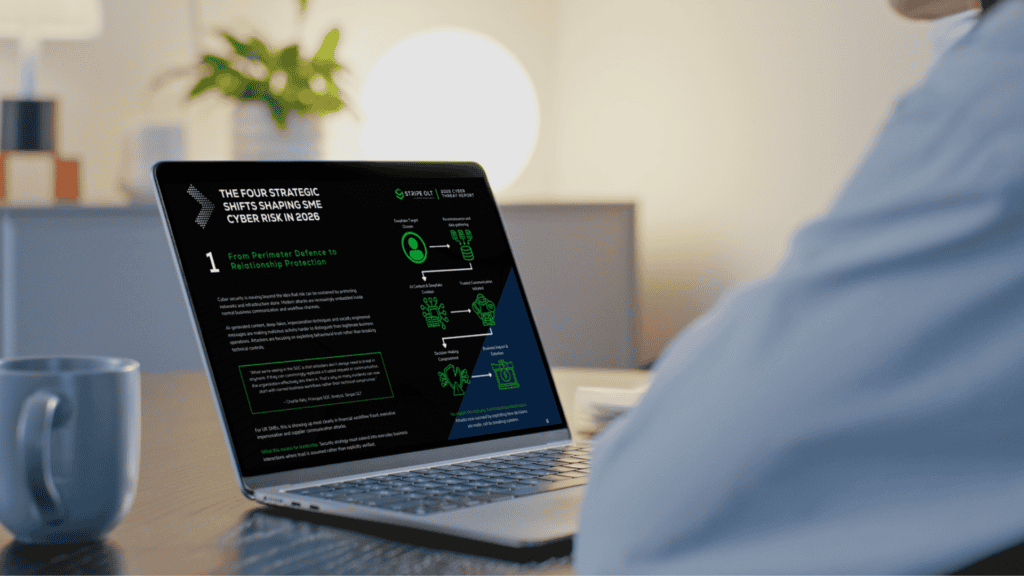
The 2026 Cyber Threat Report explores how attackers are exploiting people, identities and trust to bypass traditional defences, helping UK SME leaders understand the risks they need to prioritise in 2026.
Canary Tokens offer a practical way to strengthen detection and visibility. In this article, we'll explore how they work, where they add value, and how organisations can use them as part of a wider security strategy.
Our SOC team recently uncovered hidden surveillance functionality within a trusted browser extension, including capabilities designed to collect browsing activity, generate unique identifiers and communicate with external infrastructure.
This article breaks down CVE-2026-32201, a zero-day spoofing vulnerability in Microsoft SharePoint Server. You’ll learn how the flaw works, why “spoofing” is more dangerous than it sounds, and what your team needs to do right now if on-premises SharePoint is part of your environment.
This report provides a detailed analysis of OAuth token abuse, focusing on how threat actors bypass defensive security measures to gain unauthorised access.
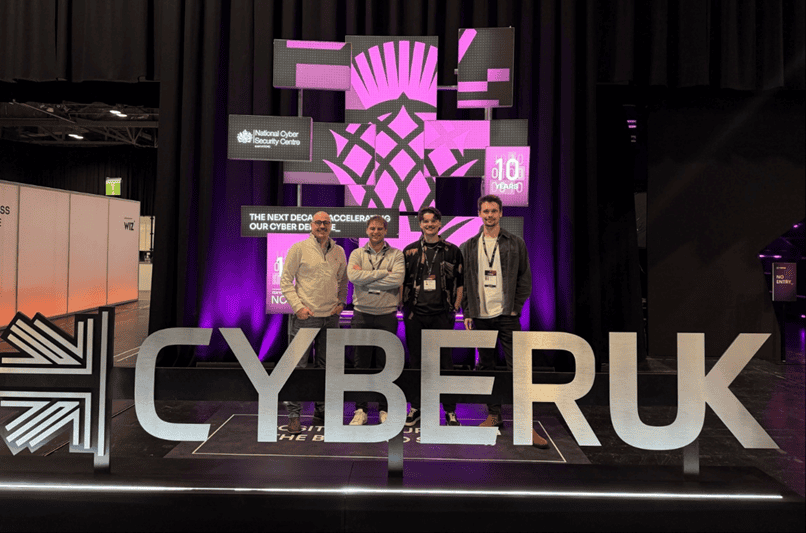
This Expert Intel summarises the key cyber security themes from CYBERUK 2026, exploring how AI is accelerating attacker capability, why identity remains the primary control gap, and what UK based organisations should prioritise to strengthen detection, response, and supply chain resilience.
Microsoft is reshaping its licensing strategy with the introduction of Microsoft 365 E7, new pricing changes, continued Teams separation, and additional security and AI functionality being bundled into existing licences. For organisations investing in AI, automation, security, and compliance, these changes could significantly affect licensing costs, procurement decisions, and long-term Microsoft 365 strategy.
This report provides an in‑depth analysis of the Tycoon2FA phishing‑as‑a‑service platform, including how it bypasses MFA and harvests credentials through session authentication cookies. In addition, the report outlines recommended mitigation strategies to help prevent and detect this phishing technique.
This website uses cookies. By using this site you agree to our use of cookies. We use cookies to enhance your experience. To understand the specific cookies we use and how we handle your data, see our Cookie Policy, Privacy Policy and Terms & Conditions. Manage your preferences at any time by clicking the 'View Preferences' button.
Functional
Always active
The technical storage or access is strictly necessary for the legitimate purpose of enabling the use of a specific service explicitly requested by the subscriber or user, or for the sole purpose of carrying out the transmission of a communication over an electronic communications network.
Preferences
The technical storage or access is necessary for the legitimate purpose of storing preferences that are not requested by the subscriber or user.
Statistics
The technical storage or access that is used exclusively for statistical purposes.The technical storage or access that is used exclusively for anonymous statistical purposes. Without a subpoena, voluntary compliance on the part of your Internet Service Provider, or additional records from a third party, information stored or retrieved for this purpose alone cannot usually be used to identify you.
Marketing
The technical storage or access is required to create user profiles to send advertising, or to track the user on a website or across several websites for similar marketing purposes.