"Moving to E5 has been really good from a security point of view... Now we can get a holistic view of what’s going on, which helps us to make changes and recommendations for future plans."
IT Service Manager
Ian Harkess
Trusted by industry leaders
Kickstart Your FastTrack Journey
Fill out the short form below to express your interest in our FastTrack programme, and we’ll be in touch soon.
Please note: A minimum of 150 enterprise licenses is required for FastTrack eligibility.
“We needed to find solutions to a variety of issues whilst being a complex business, operating in a 24/7 environment. Stripe OLT listened and understood immediately the challenges we faced.”
IT Operations Manager
Simon Darley
Trusted by industry leaders
Let's Talk
Call us on one of the numbers below, we cover the whole of the UK, so call the nearest office.
“We needed to find solutions to a variety of issues whilst being a complex business, operating in a 24/7 environment. Stripe OLT listened and understood immediately the challenges we faced.”
What the NCSC’s Early Warning service actually does, and why it’s one of the most underused tools in UK cyber security.
“When attacks move this fast, time-to-detect is crucial.”
At Stripe OLT, we talk about cyber awareness a lot – but for us, it isn’t something that starts and ends in October. It’s every day life for our SOC.
We see first-hand how quickly the landscape shifts. Microsoft’s Digital Defence Report 2024 highlights a stark reality – password-based attacks have surged by more than tenfold in just a year, with Microsoft now blocking an average of 7,000 password attacks every second across its platforms.
That’s not an abstract number. It reflects what we see daily in our SOC: attackers are faster, more automated, and more persistent than ever. And while the headlines focus on large enterprise attacks, SMEs continue to face the same threats, often without the visibility or resources they need to detect early warning signs.
When attacks move this fast, time-to-detect is crucial.
The Power of Free Threat Intelligence
That’s why I’m constantly surprised by how many UK organisations, haven’t signed up to the NCSC’s Early Warning service.
It’s completely free for UK Businesses.
And it’s one of the simplest ways to gain visibility into whether your organisation has ongoing or undetected malicious activity.
What does it do?
Early Warning will notify on all cyber attacks detected by our feed suppliers against your organisation
Flags signs of exposure to known exploits or scanning activity
Provides high fidelity insight into early indicators of compromise
It takes just minutes to register, and the data you receive is sourced directly from government and trusted public feeds.
Why it matters?
Throughout my career, I’ve worked with security teams of every maturity level, and one thing remains constant – Early Warning won’t prevent an attack, but it could be the reason you catch it early. It can tip you off to an unnoticed misconfiguration, a compromised asset, or an attacker probing your network perimeter.
And in an age where the average dwell time of a threat actor inside a network is measured in weeks – every day matters.
Most compromises are moving quickly, with attacks sometimes launched and final payloads deployed within minutes.
If you’re depending on periodic logs or manual review, chances are your detection window is being outpaced.
That makes free, high-fidelity feeds like the NCSC Early Warning service not just helpful, but strategically critical for added situational awareness.
Combine Intelligence with Proactive Action
For many, security needs to be simple – and that means at the very least, you need to combine the fundamentals with smart, proactive layers of defence.
Vulnerability patching
Strong identity protection
Endpoint detection and response (EDR)
Continuous monitoring through a SOC
And yes, early threat intelligence like the NCSC service
This isn’t just another box to tick. It’s a strategic opportunity to gain early situational awareness.
If I could give you one bit of advice to takeaway during cyber awareness month – don’t miss what’s free and effective. If you haven’t registered with the early warning system yet – do it today.
Free intelligence like NCSC’s Early Warning service is a great start – but it’s only one piece of the puzzle. For complete visibility, continuous monitoring, and 24/7 response, get in touch with our experts today.
Modern Business Email Compromise (BEC) attacks often rely on compromised mailboxes rather than obvious account takeovers. In this article, we'll explore the tactics observed in recent investigations, the signs defenders should look for and practical steps organisations can take to reduce risk.
Remote access technologies have become a staple of modern business operations, enabling secure connectivity for distributed workforces and third-party suppliers. But as cyber defenders have learnt time and time again, threat actors are often quick to adopt the same legitimate tools organisations rely on every day.
Mesh VPN platforms such as Tailscale, Headscale, ZeroTier, Nebula and Netmaker provide secure, encrypted connectivity between devices. While valuable for legitimate remote access, those same capabilities can also be abused by attackers seeking persistent access to compromised systems.
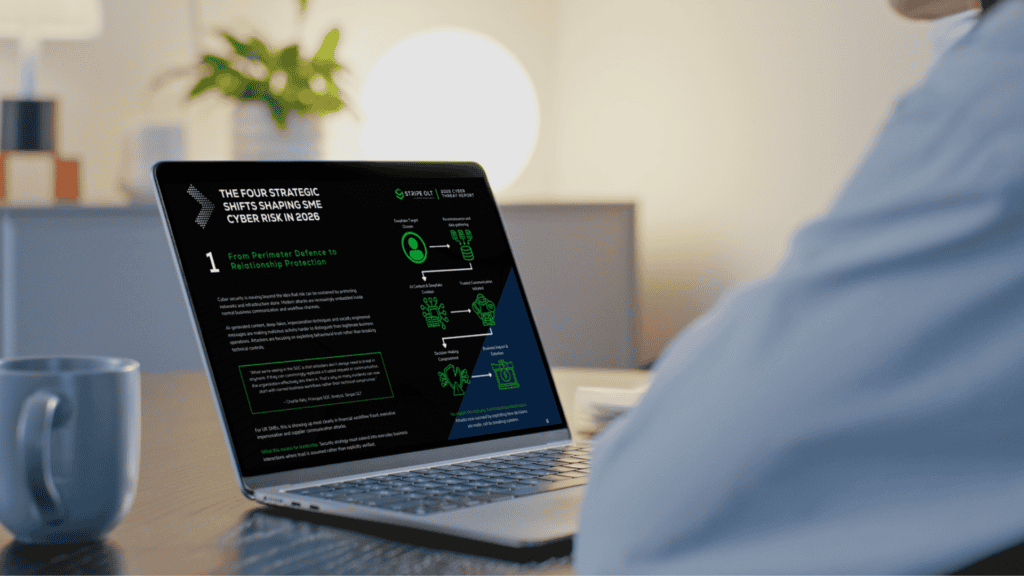
The 2026 Cyber Threat Report explores how attackers are exploiting people, identities and trust to bypass traditional defences, helping UK SME leaders understand the risks they need to prioritise in 2026.
Canary Tokens offer a practical way to strengthen detection and visibility. In this article, we'll explore how they work, where they add value, and how organisations can use them as part of a wider security strategy.
Our SOC team recently uncovered hidden surveillance functionality within a trusted browser extension, including capabilities designed to collect browsing activity, generate unique identifiers and communicate with external infrastructure.
This article breaks down CVE-2026-32201, a zero-day spoofing vulnerability in Microsoft SharePoint Server. You’ll learn how the flaw works, why “spoofing” is more dangerous than it sounds, and what your team needs to do right now if on-premises SharePoint is part of your environment.
This report provides a detailed analysis of OAuth token abuse, focusing on how threat actors bypass defensive security measures to gain unauthorised access.
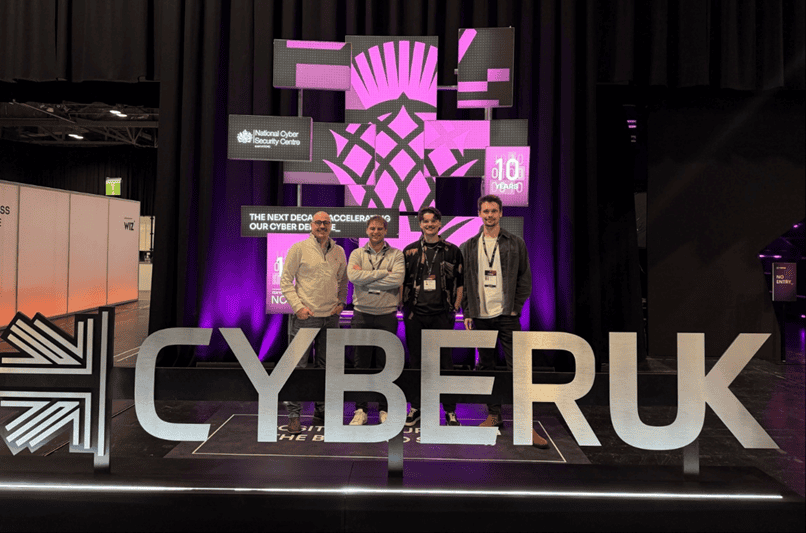
This Expert Intel summarises the key cyber security themes from CYBERUK 2026, exploring how AI is accelerating attacker capability, why identity remains the primary control gap, and what UK based organisations should prioritise to strengthen detection, response, and supply chain resilience.
Microsoft is reshaping its licensing strategy with the introduction of Microsoft 365 E7, new pricing changes, continued Teams separation, and additional security and AI functionality being bundled into existing licences. For organisations investing in AI, automation, security, and compliance, these changes could significantly affect licensing costs, procurement decisions, and long-term Microsoft 365 strategy.
This report provides an in‑depth analysis of the Tycoon2FA phishing‑as‑a‑service platform, including how it bypasses MFA and harvests credentials through session authentication cookies. In addition, the report outlines recommended mitigation strategies to help prevent and detect this phishing technique.
In this intel we set out to understand the changing landscape of trust, in a digital world where AI-generated code is permeating the software supply chain at scale and AI-enabled phishing is making adversarial infrastructure harder than ever to distinguish from the real thing.
This website uses cookies. By using this site you agree to our use of cookies. We use cookies to enhance your experience. To understand the specific cookies we use and how we handle your data, see our Cookie Policy, Privacy Policy and Terms & Conditions. Manage your preferences at any time by clicking the 'View Preferences' button.
Functional
Always active
The technical storage or access is strictly necessary for the legitimate purpose of enabling the use of a specific service explicitly requested by the subscriber or user, or for the sole purpose of carrying out the transmission of a communication over an electronic communications network.
Preferences
The technical storage or access is necessary for the legitimate purpose of storing preferences that are not requested by the subscriber or user.
Statistics
The technical storage or access that is used exclusively for statistical purposes.The technical storage or access that is used exclusively for anonymous statistical purposes. Without a subpoena, voluntary compliance on the part of your Internet Service Provider, or additional records from a third party, information stored or retrieved for this purpose alone cannot usually be used to identify you.
Marketing
The technical storage or access is required to create user profiles to send advertising, or to track the user on a website or across several websites for similar marketing purposes.