"Moving to E5 has been really good from a security point of view... Now we can get a holistic view of what’s going on, which helps us to make changes and recommendations for future plans."
IT Service Manager
Ian Harkess
Trusted by industry leaders
Kickstart Your FastTrack Journey
Fill out the short form below to express your interest in our FastTrack programme, and we’ll be in touch soon.
Please note: A minimum of 150 enterprise licenses is required for FastTrack eligibility.
“We needed to find solutions to a variety of issues whilst being a complex business, operating in a 24/7 environment. Stripe OLT listened and understood immediately the challenges we faced.”
IT Operations Manager
Simon Darley
Trusted by industry leaders
Let's Talk
Call us on one of the numbers below, we cover the whole of the UK, so call the nearest office.
“We needed to find solutions to a variety of issues whilst being a complex business, operating in a 24/7 environment. Stripe OLT listened and understood immediately the challenges we faced.”
Your password doesn’t meet the complexity requirements.
Published: November 7, 2023
Updated: October 22, 2025
Expert: Lewis Barry
Role:Security Analyst
Specialises in: Security Operations
What you will learn:
Taking an up-to-date approach, when it comes to password policies, doesn't have to be complex... Utilising Entra ID, our Microsoft expert Lewis, will take you through his latest recommendations.
Too much of the focus today is still on how the actual password is composed, rather than adopting multi-factor authentication and Self-Service Password Reset.
8 characters or more, some special, throw some numbers in there, and rotate often.
Pretty much the standard advice for creating passwords for as long as computer systems have existed. I want to talk about why this logic isn’t important anymore, providing you’ve got other controls and training in place.
Microsoft Defaults
In Active Directory, the Default Domain Group Policy Object will have a password policy with the following settings:
Enforce password history: 24
Maximum password age: 42 days
Minimum password age: 1 day
Minimum password length: 7
Complexity requirements: Enabled
How many of you look at that now and wince a bit?
In Entra ID (formerly Azure Active Directory) the standards are:
Enforce password history: 1
Maximum password age: 90 days
Minimum password age: 0 days
Minimum password length: 8
Complexity requirements: Enabled
Slightly better, but still not what good looks like.
While this has been “best practice” for many years, too much of the focus today is still on how the actual password is composed, rather than adopting multi-factor authentication and Self-Service Password Reset.
Many organisations out there today will have highly specific requirements: some might want 12 characters minimum, others encourage passphrases, and if you’re really unlucky, ridiculously short expiry times.
Passwords aren’t the important bit anymore
As Gabe Newell demonstrated with the introduction of Steam Guard over 10 years ago, it’s the MFA element that protects him.
Our industry has not yet caught up with this idea, hence the slew of external regulators and insurers demanding standards that they haven’t questioned or revised recently.
What you should be doing
If Entra ID is your identity provider:
Leave the default password creation policy as it is – go configure a banned password list if you really want to
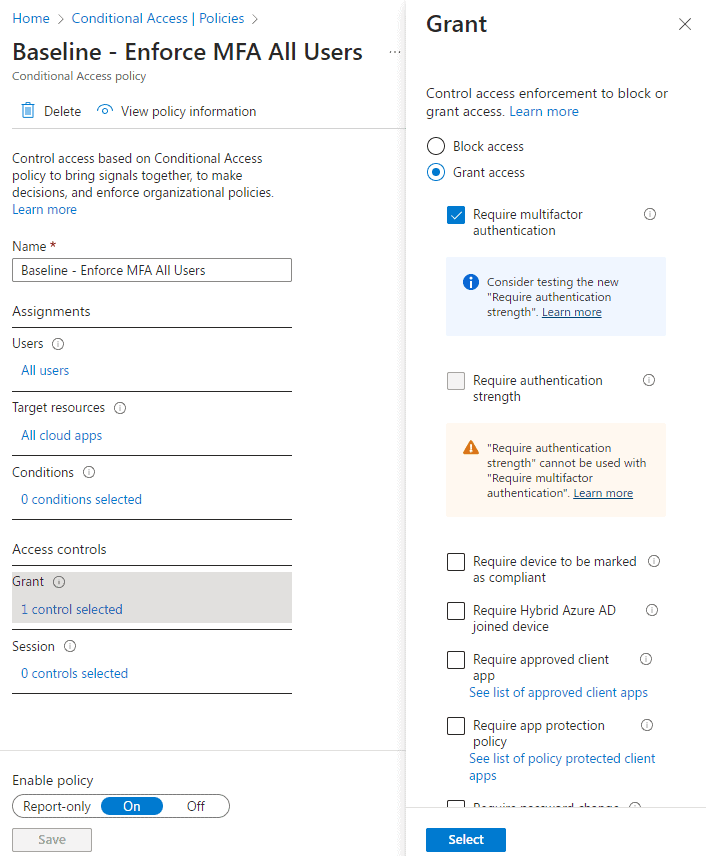
Create a Conditional Access policy to enforce MFA for All Cloud Apps for All Users*
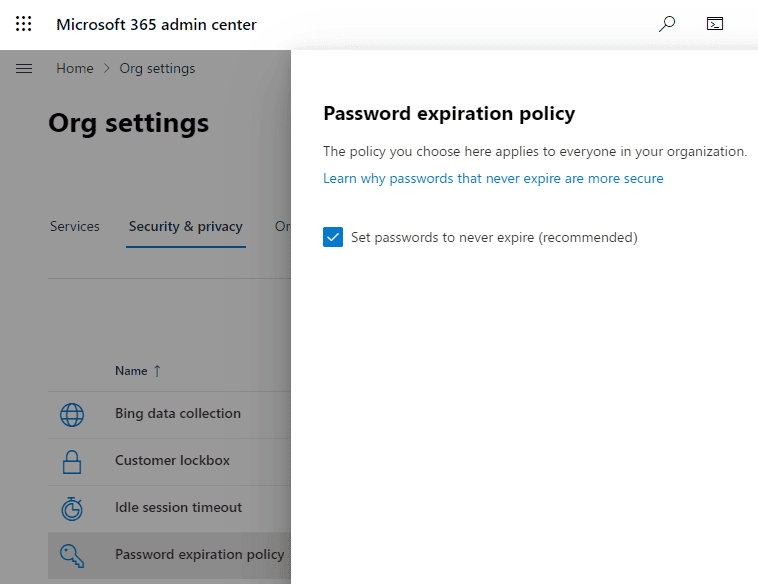
Disable password expiry from the M365 Admin Portal
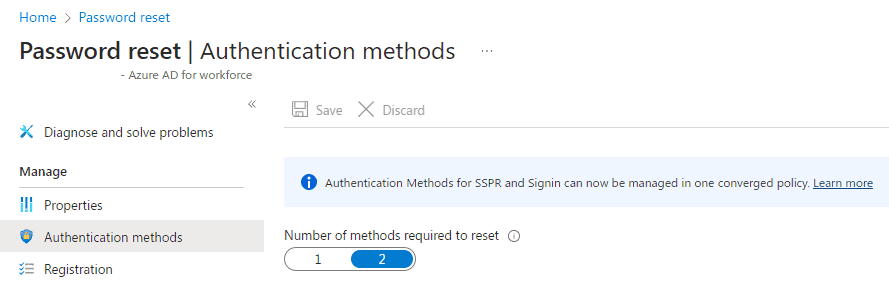
Configure Self-Service Password Reset and target it to ALL USERS
*There are legitimate exceptions to make in Conditional Access, but they are not to be made for end-users (Your C-Levels are just like everybody else).
…There are other CA policies I’d recommend, but that isn’t for this post.
Expanding on those suggestions
Conditional Access Policy
Pretty straightforward, although if you’ve never implemented this before, mit ight be best to use “report-only” for a week or two.
Disabling Password Expiry
This option is over at https://admin.microsoft.com –> Org Settings –> Security & Privacy
SELF-SERVICE PASSWORD RESET
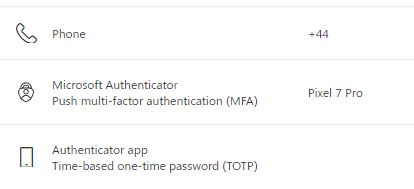
Assuming you’ve made the migration to Entra ID Authentication Methods, you’ll have a few options to choose from for users to use to reset their own passwords without calling the helpdesk:
Microsoft Authenticator
SMS
Third-party software OATH tokens
Voice call
Email OTP
(Eventually, Security Questions will be available too, although some of those are pretty weak. I recently saw a custom one added, which was: “What is your favourite colour?”)
I always recommend requiring two of the above methods for a password reset.
Once configured, users will be able to add methods for SSPR over at https://aka.ms/mfasetup
End-users
It’s all well and good being the sysadmin creating these strong policies, but you also need to tell people about them. Number-matching MFA has done a lot to prevent mistakes of people approving prompts without thinking; however, users need to be informed about the new login experience.
For example, tell them:
Don’t approve or proceed with anything you aren’t expecting
This website uses cookies. By using this site you agree to our use of cookies. We use cookies to enhance your experience. To understand the specific cookies we use and how we handle your data, see out Cookie Policy, Privacy Policy and Terms & Conditions. Manage your preferences at any time by clicking the 'View Preferences' button.
Functional
Always active
The technical storage or access is strictly necessary for the legitimate purpose of enabling the use of a specific service explicitly requested by the subscriber or user, or for the sole purpose of carrying out the transmission of a communication over an electronic communications network.
Preferences
The technical storage or access is necessary for the legitimate purpose of storing preferences that are not requested by the subscriber or user.
Statistics
The technical storage or access that is used exclusively for statistical purposes.The technical storage or access that is used exclusively for anonymous statistical purposes. Without a subpoena, voluntary compliance on the part of your Internet Service Provider, or additional records from a third party, information stored or retrieved for this purpose alone cannot usually be used to identify you.
Marketing
The technical storage or access is required to create user profiles to send advertising, or to track the user on a website or across several websites for similar marketing purposes.